Developing a custom inflatable product fails more often for reasons of process than of manufacturing capability. A factory that welds PVC competently can produce a good product; the difficulty lies in transferring a buyer’s intent into a specification precise enough to be manufactured consistently. The development process exists to close that gap in stages, so that errors are discovered on a drawing or a sample rather than in a shipping container.
At Jinhua Zongjin Toys we run custom programmes through five stages: requirement communication, design and proposal, sampling and testing, mass production, and quality control before shipment. What follows is what each stage covers, and what a buyer should bring to it.
Stage 1: Requirement Communication
The first stage converts an intended product into a set of measurable constraints. It is the stage most often compressed by buyers eager to reach a quotation, and the compression is almost always paid for later in rework.
A complete requirement definition answers the following:
- Function. What the product must do, in what posture or application, for how long per use cycle.
- Environment. Destination climate, exposure to UV, contact with salt or chlorinated water, contact with ground.
- User profile. Adult or child, supervised or unsupervised, single user or shared.
- Load and pressure. Expected load, expected inflation pressure, whether the product is inflated by pump or by mouth.
- Regulatory market. Which market the product will be sold in, and therefore which safety and labelling regime applies.
- Commercial frame. Target quantity, target landed cost, packaging format, and shipping mode.
Supplying these six items in writing shortens the development cycle more than any other action available to a buyer. Vague briefs do not produce cheaper products; they produce products that satisfy the stated requirement while missing the unstated one.
Stage 2: Design and Proposal
With a requirement defined, the second stage produces a design proposal. This is where OEM and ODM programmes diverge.
| Model | Who defines the design | Best suited to |
|---|---|---|
| OEM | Buyer supplies design; manufacturer executes to specification | Buyers with in-house design capability and an established product line |
| ODM | Manufacturer develops design against a stated requirement | Buyers entering a category, or seeking differentiation without design overhead |
| Hybrid | Buyer supplies concept; manufacturer engineers for manufacture | Buyers with a strong brand concept but limited production engineering |
A proposal should include the sheet specification, chamber layout and count, seam classes, valve selection, print method, packaging format and an indicative tooling requirement. Where a design requires a new mould — for a valve body, a handle or a shaped component — the tooling cost and lead time belong in the proposal rather than appearing later as an addition.
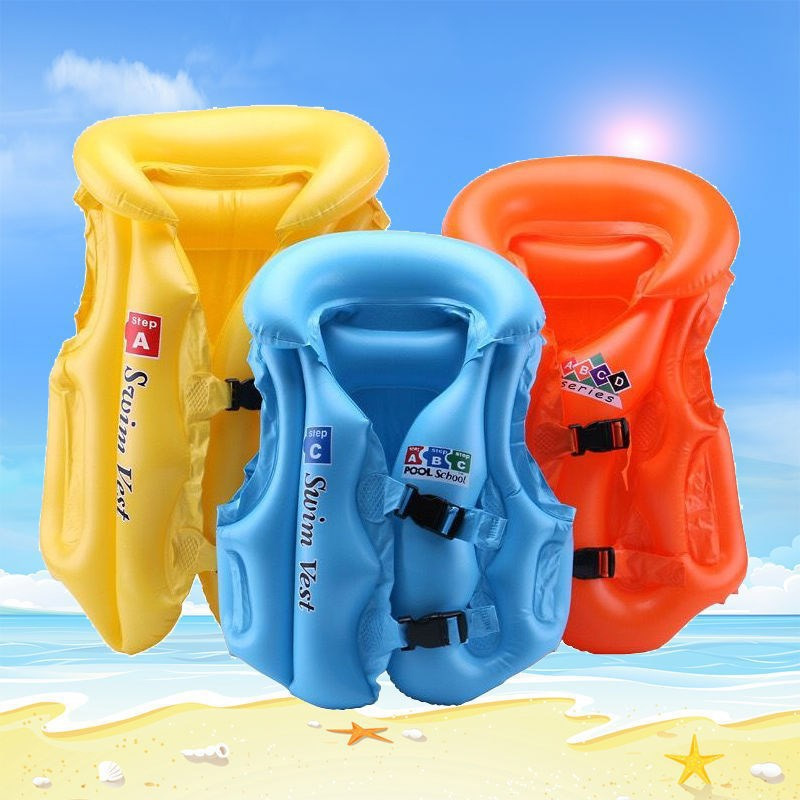
The design and proposal stage fixes sheet specification, chamber layout and print method before any sample is cut.
Stage 3: Sampling and Testing
Sampling is the stage that most reliably predicts production outcome, provided the sample is tested rather than merely inspected. A sample that looks correct and is returned with approval based on appearance alone has validated nothing.
What a sample should undergo
- Dimensional verification. Inflate to rated pressure and measure. PVC products assume their true dimensions only under pressure; a flat measurement is not a specification check.
- Inflation retention test. Inflate to rated pressure, hold at ambient temperature, and record pressure at defined intervals. This separates good seams from adequate ones.
- Seam integrity test. A straight-pull test on seam strips. A correct weld fails in the sheet, not at the joint.
- Load test. Apply the rated load at the rated pressure and check for distortion and localised stress.
- Print and finish inspection. Confirm registration, colour accuracy against the approved reference, and adhesion after abrasion.
- Valve function. Cycle the valve through its expected service count and verify sealing after cycling.
Buyers should expect and request a sampling round that produces a test report, not just a physical sample. The report is what allows a buyer to compare a production run against the approved baseline later.
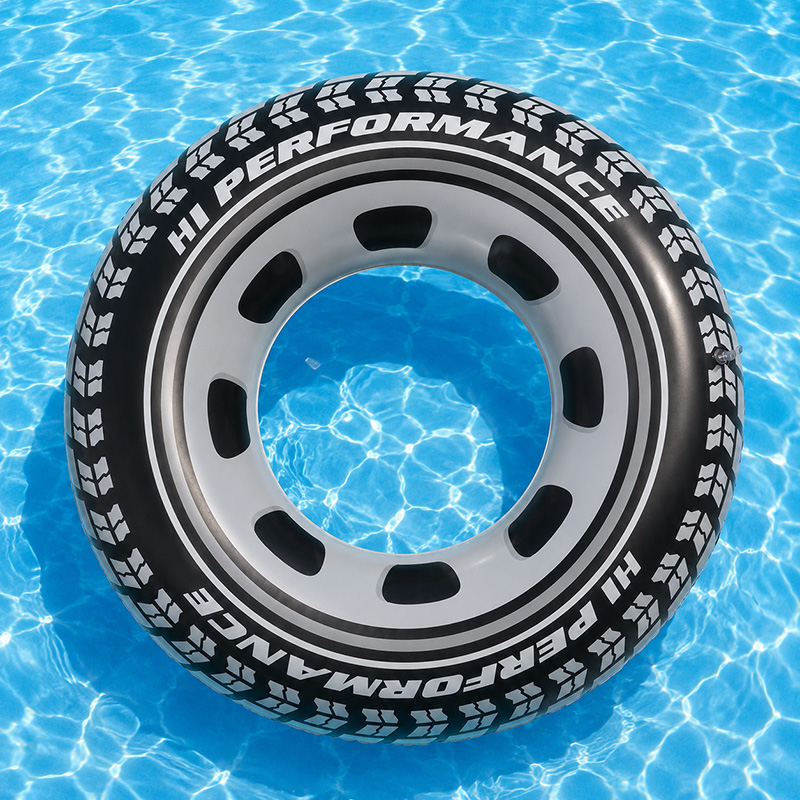
Inflation retention and seam integrity testing are what separate a validated sample from an approved-looking one.
Stage 4: Mass Production
Production converts an approved sample into repeated output. Three controls govern whether the output matches the sample.
Material control. The sheet used in production must be the sheet approved at sampling. Substitution of a nominally equivalent fabric with different plasticiser content or scrim density is a common and largely invisible source of quality drift; buyers should require batch traceability from fabric lot to finished unit.
Process control. RF welding depends on power, pressure and dwell time. Each seam class should have documented parameters, and those parameters should be verified on the production floor rather than assumed from a work instruction.
In-process inspection. Inspection at the point of seam formation catches defects while correction is still cheap. Final inspection alone catches the same defects after the labour of assembly has been incurred.
Stage 5: Quality Control and Shipping
The final stage verifies the shipment against the approved baseline before it leaves the factory.
| Check | Method | Acceptance basis |
|---|---|---|
| Appearance | Visual against approved reference sample | No deviation in colour, registration or finishing |
| Dimensions | Inflated measurement on sampled units | Within agreed tolerance band |
| Air retention | Hold test on sampled units | Pressure decay within agreed limit over stated interval |
| Seam integrity | Destructive pull test on sampled units | Failure in sheet, not at seam |
| Valve function | Functional test on every unit | Seals at rated pressure after cycling |
| Packing | Carton check against packing specification | Correct count, correct markings, carton integrity |
| Documentation | Review before release | Test reports and traceability records complete |
For buyers serving regulated markets, this stage is also where conformity documentation is assembled. Where a product falls under a toy safety regime, the relevant test evidence should be referenced in the shipment documentation rather than held only at the factory.
Preparing for a Development Programme
The practical question for most buyers is what to prepare before approaching a manufacturer. Drawing on our experience running OEM and ODM programmes across PVC products, outdoor inflatable toys, children’s toys, outdoor sports products, car accessories and water leisure products, the following preparation consistently shortens the cycle:
- A written requirement covering function, environment, user, load, market and commercial frame
- Reference samples or competitor products that demonstrate the intended feel and finish
- Brand assets in production-ready form, including logo files and colour references
- Target packaging format and retail display requirements
- Destination market and the applicable safety and labelling regime
- An agreed definition of what constitutes acceptance at each stage
The last item is the one most often omitted and the one that causes the most dispute later. Development proceeds smoothly when both parties have written down, in advance, what a correct sample and a correct shipment look like. Because we support customisation across size, colour, logo, printing, structure and packaging, and because our process runs through documented stages with defined outputs, a buyer who arrives with those six items prepared can move from requirement to validated sample with very little ambiguity remaining.